

Why July Is the Right Time to Review Your Commercial Cleaning Contract
 Quick answer: July marks the financial year end for many New Zealand retailers and a natural reset point for businesses across office and industrial sectors. It is one of the best times of year for a commercial cleaning contract review, to assess what is and is not working, and align cleaning services with your incoming budget and operational priorities.
Every year, businesses across Aotearoa hit a natural pause point. Budgets reset. Contracts come up for renewal. Operational reviews land on desks. For many organisations, this window falls around July, and it is one of the most practical moments of the year to take stock of what your cleaning partner is actually delivering.
Cleaning is not often front of mind until something goes wrong. A complaint from a staff member. A visitor who notices something that should not be noticed. A compliance concern that surfaces during a routine audit. By that point, the question is not whether to act but why it took so long.
This post looks at how end-of-financial-year (EOFY) pressures and priorities differ across retail, office, and industrial environments in New Zealand, and why July provides a clear and logical moment to review whether your current cleaning arrangement is still the right fit.
How EOFY plays out across different sectors
New Zealand’s standard tax year runs from 1 April to 31 March. But for many businesses, particularly in retail, the financial calendar looks different. The Warehouse Group, one of New Zealand’s largest retailers, operates on a financial year ending in early August. Many other retail businesses align their planning cycles similarly, meaning July sits squarely in the EOFY period for a significant portion of the retail sector.
For office-based businesses, the March EOFY is more common, but July still functions as a mid-year review moment. By then, budget allocations made at the start of the financial year have had time to prove themselves, and adjustments can be made before the year gets away from you.
Industrial operations tend to run on operational cycles rather than strict financial calendars. Compliance reviews, maintenance schedules, and supplier assessments often happen twice a year, making July a natural checkpoint.
What all three sectors share is this: July is a moment when leaders are paying attention to costs, contracts, and performance. That makes it the right time to look at cleaning.
 The retail sector: presentation pressure and budget resets
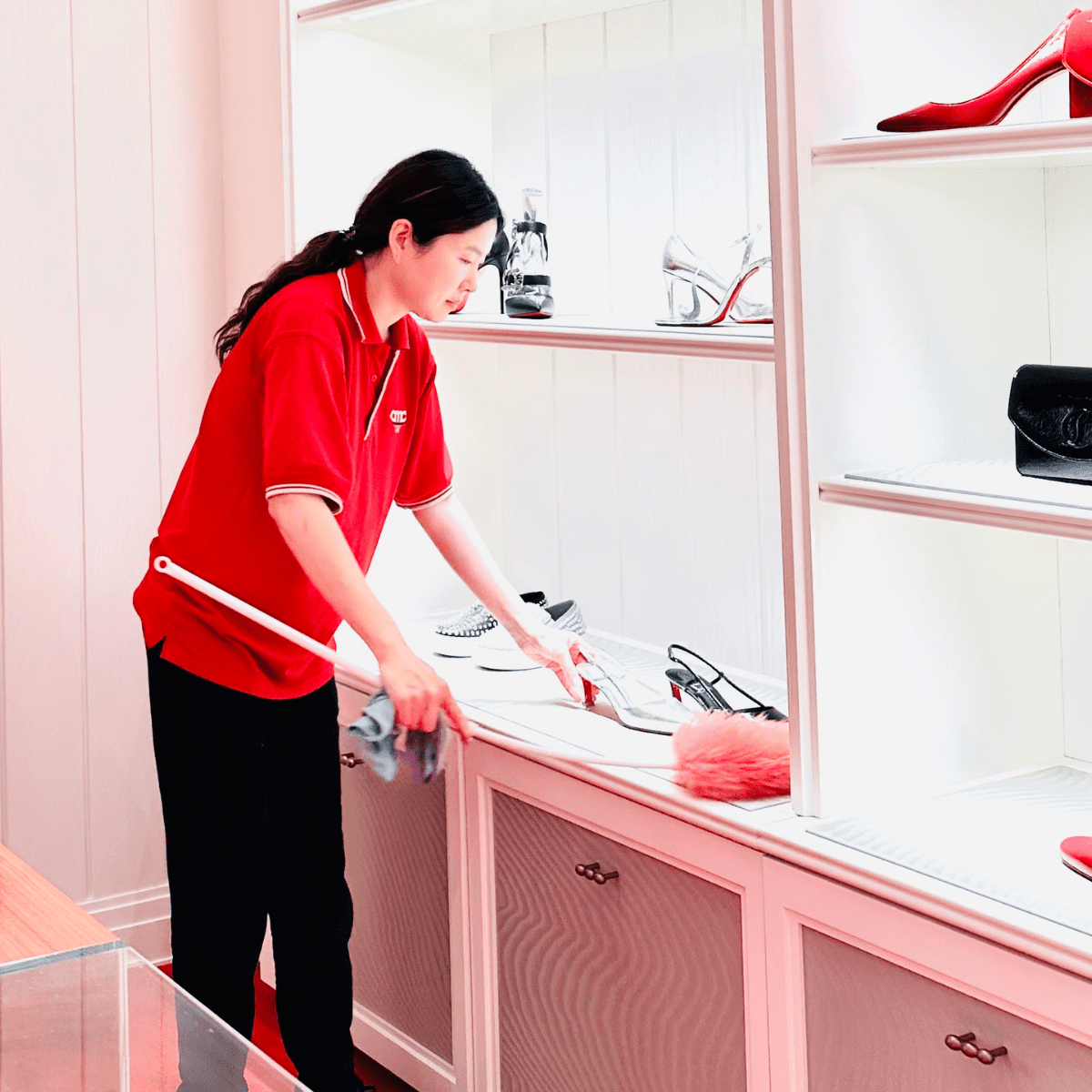
Retail is unforgiving when it comes to presentation. Customers form immediate impressions based on what they see and how a space feels. A scuffed floor, a streaked window, or a poorly maintained changeroom signals something about the brand, whether that is fair or not.
July falls in the middle of the New Zealand winter trading period, when foot traffic shifts indoors and sales floors absorb more wear. For retailers whose financial year ends around this time, it is also when teams are reviewing what every cost line delivered. Cleaning contracts are no exception.
Key questions for retail businesses to ask at this point include:
- Is cleaning scheduled around trading hours, or is it disrupting the customer experience?
- Are high-contact surfaces, fitting rooms, and entranceways being maintained consistently throughout the day?
- Does your current provider respond quickly when something needs attention outside the standard schedule?
- Are you paying for a scope of work that no longer matches how your space is being used?
Retail environments often require a more dynamic approach than a fixed weekly schedule allows. If your current arrangement was set up years ago and has not been revisited, the scope may not reflect how your store actually operates today.
The office sector: occupancy, hybrid work, and workplace standards
Office cleaning has become more complex since the widespread shift toward hybrid working. Occupancy levels fluctuate across the week. Some floors are busy on a Tuesday and quiet on a Thursday. Fixed cleaning schedules built around five-day occupancy no longer make sense for many workplaces.
According to the Ringa Hora Workforce Development Council’s 2025 Cleaning Industry Deep Dive Report, shifts in workplace dynamics, including remote work and smaller office footprints, have reduced demand for traditional cleaning services. The challenge for businesses is ensuring that contracts reflect actual usage, not historical assumptions.
The risks of getting this wrong run in both directions. Overpaying for cleaning that is not needed. Or undercleaning areas that do see regular use, which affects the environment your staff and visitors work in.
July is a practical time for office-based businesses to audit whether their current cleaning scope aligns with how the workplace is actually being used. If occupancy patterns have changed since the contract was originally negotiated, the scope and frequency of cleaning should reflect that.
Beyond cost, workplace presentation matters to staff. A well-maintained office communicates that the organisation takes the environment seriously. That has a quiet but real effect on how people feel about coming in.
The Industrial Sector: Compliance, Consistency, and Operational Resilience

Industrial and logistics environments carry cleaning requirements that go beyond presentation. Hygiene in warehouses, manufacturing facilities, and distribution centres is tied to workplace safety, regulatory compliance, and operational continuity.
In these environments, a cleaning provider that cannot guarantee consistency creates real risk. If cleaning schedules slip during periods of high operational demand, that creates safety concerns, potential compliance exposure, and disruption to production lines or despatch operations.
WorkSafe New Zealand sets clear expectations around the maintenance of clean, safe working environments. In an industrial context, cleaning is part of the safety infrastructure, not a support service that sits outside it.
July is a useful moment for industrial businesses to review:
- Whether current cleaning frequencies meet compliance obligations
- Whether the provider has the right induction and site-specific training for your environment
- Whether chemical handling and hazardous waste protocols are being followed consistently
- Whether reporting provides enough visibility to support internal audit requirements.
If the answers to any of these questions are uncertain, that is worth acting on before an external audit makes the decision for you.
Why July is the right moment across all three sectors
Regardless of which sector you operate in, July offers a clear window for contract review. Here is why.
- Budgets are fresh or resetting. For retail businesses at EOFY and office businesses mid-year, July is when financial conversations are happening. Locking in a revised or new cleaning arrangement now means the cost lands cleanly in the right budget period.
- Operational patterns are visible. By midway through the year, you know how your space is actually being used. The data is there to make informed decisions about scope and frequency.
- Notice periods matter. Standard commercial cleaning contracts in New Zealand typically require 30 to 90 days’ notice to terminate or renegotiate. Starting the review in July gives you time to act within that window before another full quarter passes.
- Winter surfaces issues. The cooler, wetter months accelerate wear on floors, entranceways, and high-traffic zones. If issues are emerging, July is the time to address them rather than let them run through to spring.
What to Look for in a Commercial Cleaning Partner
Switching providers, or renegotiating with your current one, is a significant decision. These are the qualities that separate a dependable long-term partner from a transactional arrangement:
- Sector experience. A provider who understands how retail, office, or industrial environments operate will design a scope of work that actually fits. Generic contracts create gaps.
- Certified quality management. Look for ISO 9001 (quality), ISO 45001 (safety), and ISO 14001 (environmental) certification. These are independently audited standards that demonstrate a provider is running a serious operation.
- Transparent reporting. Regular audits, real-time access to performance data, and clear KPIs give you visibility without needing to chase. You should not have to wonder whether the work is being done.
- Responsive communication. When something needs attention outside the normal schedule, how quickly does your provider respond? The answer tells you a lot about how the relationship will work long-term.
- Seamless transition. If you are changing providers, a structured onboarding and handover process protects you from service disruption. A good partner will treat the transition as carefully as the ongoing service.
Review your cleaning contract before the year gets away from you
A cleaning contract that made sense two or three years ago may not reflect where your business is now. The scope may have drifted. The relationship may have stagnated. Or the arrangement may still be working well, but it is worth knowing that for certain.
July is a practical moment to ask honest questions.
- Are standards being met consistently?
- Is the provider communicating proactively?
- Does the scope reflect how your environment is actually used today?
AMC Commercial Cleaning has worked alongside Kiwi businesses across retail, office, and industrial sectors since expanding into New Zealand in 2014. Our teams operate across Auckland, Wellington, Christchurch, Hamilton, and Dunedin, and our approach is built on clear systems, consistent delivery, and a genuine commitment to the environments and people we look after.
If your cleaning contract is due for review, or you are not quite sure whether it should be, we are happy to have that conversation. Get in touch with the AMC New Zealand team today.
You might be interested in learning more about:

