

When Lower Frequency Starts Costing More
 Many businesses do not question their cleaning setup until something goes wrong. A failed hygiene inspection. A tenant complaint after dirty washrooms are left overnight. A rushed pre-audit clean that costs more because the site has been slipping for weeks.
In many cases, businesses reduce cleaning frequency to manage costs, with day-to-day upkeep gradually falling to employees whose primary responsibilities sit elsewhere. That approach can look efficient on paper.
On site, it often creates gaps in hygiene standards, presentation, safety, and contractor accountability.
This is where commercial cleaning services in New Zealand tend to break down: not because cleaning stops, but because the programme no longer matches how the site is actually used.
In this article:
- Why low-frequency cleaning creates avoidable site issues
- Where the pressure shows up first in offices, retail, childcare, and industrial sites
- A comparison of reactive cleaning versus planned recurring cleaning
- What experienced contractor management looks like in practice
- How AMC Commercial Cleaning NZ supports facilities, operations, and procurement teams day to day
Where Low-Frequency Cleaning Starts to Fail
The problem is rarely obvious on day one. A site can look acceptable just after a visit. Then the week moves on. Kitchens pick up residue. Washrooms lose presentation. Entry glass marks up. High-touch points are used constantly and wiped inconsistently, if at all. By the time someone notices, the issue is usually bigger than “it needs a clean.”
We have seen this before:
- an office floor that looked fine until a client walked through the amenities before a lease review
- a childcare site scrambling before an inspection because nappy-change and touchpoint cleaning records were not keeping pace with daily use
- a warehouse where oil and dust buildup turned a manageable housekeeping issue into a slip risk
- a retail site trying to recover from customer complaints after weekend traffic left fitting rooms and entries below standard
In each case, the original decision was usually about cost control. The outcome was extra pressure, reactive spending, and more time spent fixing preventable issues.
Why Staff Fill the Gap, and Why That Rarely Holds
When cleaning frequency is cut back, shared areas do not stay untouched. Someone takes care of them. Reception clears the front entry. Teachers wipe surfaces. Admin staff restock washrooms. Supervisors sweep a workshop corner before visitors arrive. It is understandable, and it often starts informally. The issue is consistency.
Employees focus on what is visible and urgent. They are not working to a cleaning scope. They are not tracking hygiene standards. They are fitting basic upkeep around the job they were hired to do. That is how gaps appear between what looks clean and what is actually being maintained properly. Over time, this creates a familiar set of problems:
- standards vary from day to day
- cleaning records become hard to verify
- higher-risk areas get missed
- internal teams become frustrated
- site managers end up chasing avoidable issues
Different Sites, Different Pressure Points
Not every site needs the same cleaning frequency. But most sites show stress in predictable places when the programme is too light.
 Offices

Office cleaning problems usually show up in kitchens, lift buttons, kitchenette handles, EFTPOS screens, shared fridge doors, stair rails, and washrooms first. The front-of-house area may still look presentable, but behind that, bins overflow, shared appliances build up grime, and amenities start drawing complaints. This is common in multi-tenant buildings where presentation matters. One missed evening service can carry into the next day quickly, especially where there are fixed access windows or heavy weekday traffic.
Childcare and Schools
 Childcare and Schools
Childcare cleaning and school cleaning carry a different level of responsibility. Daily use is intense. Shared surfaces, bathrooms, and eating areas need regular attention. This is not just about appearance. If cleaning falls behind in these settings, the pressure comes fast. Sometimes it shows up in an inspection. Sometimes in staff concern. Sometimes in the scramble before a visit when teams realise the site has been relying on informal upkeep instead of a structured routine.
Industrial Sites
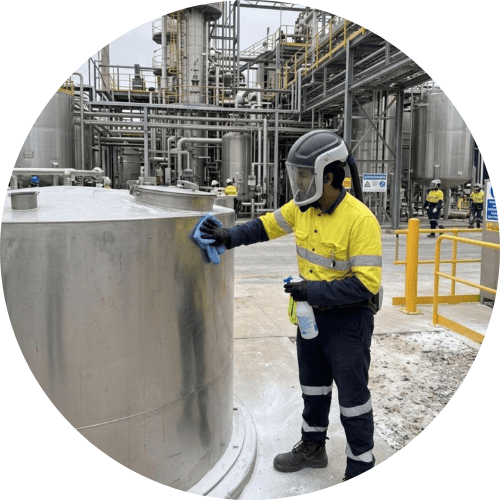
Industrial cleaning has a narrower margin for error. Dust, residues, spills, and waste buildup affect safety as well as presentation. If floors are not maintained properly, the issue is not cosmetic. It is risk. A reactive approach also tends to be more expensive here. Once a site falls behind, cleaning often has to work around operations, shutdown windows, or urgent hazards. That usually means more disruption and more cost than keeping the site under control from the start.
Retail and Customer-Facing Sites
 Retail and Customer-Facing Sites
Retail cleaning is judged in seconds. Entry glass, floors, change rooms, counters, and bathrooms all affect how the site feels to customers. The problem with low-frequency servicing is simple: customer traffic does not wait for the next scheduled visit. If cleaning only resets the site every few days, presentation can drop well before the next service. Staff then end up trying to recover standards while also serving customers.
Reactive Cleaning vs Planned Recurring Cleaning
A one-off clean has its place. So does periodic deep cleaning. But neither replaces a structured recurring programme where the site has daily use, compliance pressure, or public visibility.
| Factor | One-Off or Low-Frequency Cleaning | Planned Recurring Cleaning |
|---|---|---|
| Cost control | Looks cheaper at first, but often leads to catch-up work and urgent callouts | More predictable and easier to budget |
| Site presentation | Drops between visits | Held to a more consistent standard |
| Hygiene standards | Hard to maintain across busy weeks | Built into the routine |
| Audit readiness | Often rushed just before inspections or reviews | Easier to evidence and maintain |
| Staff involvement | Internal teams fill gaps informally | Cleaning remains with trained staff |
| Safety risks | Problems can build before anyone escalates them | Issues are addressed earlier |
| Access and scheduling | More likely to be ad hoc | Planned around site access and operating hours |
| Accountability | Scope and expectations can be vague | Clear scope, reporting, and review points |
What Better Account Management Looks Like
Good account management is not about adding layers. It is about removing guesswork. The scope should be clear from the start. What is being cleaned, how often, at what standard, and under what access conditions. Communication also needs structure. If an access window changes, a site gets busier, or a recurring issue starts showing up, that information needs to move quickly between the site and the cleaning team. Otherwise, small issues turn into complaints, missed tasks, or rushed corrective work before audits and inspections.
Key Takeaways
- Low-frequency cleaning often shifts cost rather than removing it.
- The first signs are usually washrooms, kitchens, touchpoints, and floors.
- Informal staff upkeep may help short term, but it rarely delivers a reliable standard.
- Childcare, school, industrial, and customer-facing sites carry more pressure when cleaning falls behind.
- A clear scope, realistic frequency, and regular review process prevent most avoidable issues.
How We Approach Commercial Cleaning Services
AMC Commercial Cleaning NZ starts with how the site actually operates. We look at usage, traffic, risk points, access, and the standard the site needs to hold. From there, scope and frequency are agreed clearly, with transparent pricing and defined responsibilities. Our teams are trained to work efficiently, which helps reduce time on site without cutting corners.
We stay in contact with site teams, respond when conditions change, and raise practical adjustments when reviews or site data show a better way to manage the work. This means fewer surprises, clearer accountability, and a cleaning programme that reflects the reality of the site rather than a generic schedule. For customers, that translates to steadier standards, less time spent chasing issues, and fewer last-minute problems before inspections, audits, or important visits.
See the locations we service:
- Commercial Cleaning Services Auckland
- Commercial Cleaning Services North Auckland
- Commercial Cleaning Services South Auckland
- Commercial Cleaning Services Christchurch
- Commercial Cleaning Services Wellington
FAQs

